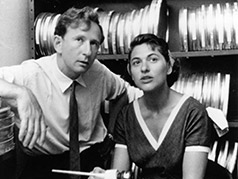
March 5, 2020 – Fifteen year anniversary of Morris Engel’s death…

Morris passed away fifteen years ago today. I’m so glad I can continue to promote his photographs and films all these years later. Here are a few photos…
Image may contain: ocean, outdoor and water
Image may contain: 3 people, people sitting, child and outdoor   Image may contain: 4 people, people standing and outdoor

Morris Engel included in PROOF Exhibition at Cleveland Museum of Art- February 2020

Morris Engel photos included in new group exhibition at the Amon Carter Museum in Ft. Worth, Texas – closing summer 2020

New exhibition at the Amon Carter Museum of American Art in Fort Worth, Texas includes Morris Engel’s picture story about a Texas diary family in Buda, Texas, originally photographed for the “How America Lives” series.

Photo below: Copyright Morris Engel,
Buda, Texas. Dairy Farmer-Rylander Family, 1949, gelatin silver print, Amon Carter Museum of American Art, Fort Worth, Texas.

World premiere of “I NEED A RIDE TO CALIFORNIA” Morris Engel’s unreleased feature from 1968 – October 23, 2019

PREMIERE of “Morris Engel’s film I NEED A RIDE TO CALIFORNIA Wednesday, October 23, 2019 at 7pm at MoMA! Made 51 years ago in 1968. In color, and a film of the times…very different from earlier b/w films made in the 50s. Followed by a discussion with Anne Morra, Jake Perlin and Mary Engel.  Tickets available at moma.org.


I Need a Ride to California. 1968. Written and directed by Morris Engel
I Need a Ride to California. 1968. USA. Written and directed by Morris Engel. Based on a story by Leon I. Rayphil. With Lilly Shell, Rod Perry, Greer St. John. 35mm. 83 min.

THE DOG LOVER at the Film Forum – May 19, 2019

Morris Engel’s short film THE DOG LOVER is playing as part of the “More Orphans of New York” program at the Film Forum on Sunday, May 19, 2019 at 5pm and Tuesday, May 21, 2019 at 2:30pm.


MORE ORPHANS OF NEW YORK Sunday, May 19, 2019- 5:10 Tuesday, May 21, 2019- 2:30
Presented by NYU cinema studies professor Dan Streible A sequel to last October’s twice-sold-out “Orphans” show/
This all-new program includes home movies show by WPIX kids’ show host in 1948; Meet Me Down at Coney…
FILMFORUM.ORG

Morris Engel included in group show at Sous Les Etoiles Gallery – 1947 Simone De Beauvoir in America


Beautiiful show at Sous Les Etoiles Gallery , 1947, Simone De Beauvoir in America which includes many APAG member archives including: Esther Bubley, Morris Engel, Sid Grossman, Saul Leiter, Fred Lyon, Wayne Miller, Rith Orkin, Art Shay, Fred Stein, Tony Vaccaro and Todd Webb.
Www.souslesetoilesgallery.net

ASAP FERG posts Morris Engel on his instagram – June 2018

One of Zac’s favorite rappers ASAP Ferg posted his grandfather, Morris Engel’s photograph yesterday on Instagram, “Boys with Shades and a Boombox, Street fair, NYC, 1970s” ASAP Ferg has 2.4 million followers and the photo has been shared by 52,000 people in one day. The power and reach of the internet and social media for a photo or for important causes is truly amazing! (Unfortunately, the photo is not credited, but hopefully, they will correct it. You can use Tineye, or reverse search to find out the photographer of a particular photo)

Boys with shades and a boombox, Street fair, NYC, 1970’s
Photo copyright MORRIS ENGEL.

No photo description available.

38

People Reached

3

Engagements

MORRIS ENGEL AT 100! April 8, 2018

MORRIS ENGEL AT 100 – AT THE METROGRAPH

www.metrograph.com 


THE NEW YORKER 
by Richard Brody – March 26, 2018
 
Excerpt from article about Steven Soderbergh
 
Soderbergh’s technical innovation and his vigorously imaginative deployment of it are at the core of the tradition of independent filmmaking. On April 8th, the centenary of the director and photographer Morris Engel, Metrograph will show his three features, including the first, “Little Fugitive,” which François Truffaut credited as a key inspiration of the French New Wave. The movie, which Engel made in 1952, with Ruth Orkin (they married in the course of production) and Ray Ashley, is the story of a young boy in Brooklyn who, tricked into thinking that he has killed his brother, flees home and reaches Coney Island. For the purpose of this film, Engel, who did his own cinematography, designed a 35-mm. movie camera to what he considered the requirements of the project—a camera that was both lightweight and didn’t need to be held up to his eye for framing. It hung from a strap and he looked down at its viewfinder, allowing him to film inconspicuously in public and to move both freely and unobtrusively. (Jean-Luc Godard later wrote to Engel in the hope of borrowing the camera, and, in the nineteen-seventies, he sought to produce, to his specifications, a similarly lightweight and portable 35-mm. camera.)
 

MOVIESAPRIL 9, 2018

The Self-Dramatizing Style of Morris Engel

A one-day retrospective traces how the filmmaker’s struggles informed generations of independent cinema.

The techniques and styles of American independent filmmaking owe much to the work of Morris Engel and Ruth Orkin, which gets a one-day retrospective at Metrograph on April 8, the centenary of Engel’s birth (he died in 2005). In 1952, Engel and Orkin, who worked as photographers, co-directed, with their friend Ray Ashley, the vastly influential independent film “Little Fugitive”; they married during the course of its production. Despite its acclaim (the filmmakers received an Oscar nomination for the story, and the film was later cited by François Truffaut as an inspiration for the French New Wave), the couple had trouble finding money for their second film, “Lovers and Lollipops.” Engel also struggled to finance the 1958 feature “Weddings and Babies,” which he made without Orkin’s participation (she had returned to still photography), and which dramatizes the difficulties faced by a couple planning to marry and make independent films. It’s a seminal entry in the now-familiar genre of an aspiring filmmaker’s first-person story.
For “Weddings and Babies,” Engel did his own cinematography using a handheld camera, made to his specifications, that was outfitted to record synchronous sound—a major innovation that he deployed to substantial dramatic ends and that also plays an onscreen role in the story. The title refers to the storefront studio of a commercial photographer named Al (John Myhers), who runs it with his girlfriend, Bea (Viveca Lindfors). They’ve been together for three years, and Bea, who’s about to turn thirty, is impatient to get married. But the thirty-four-year-old Al, who dreams of making films, sinks his bankroll—on which he and Bea could have started a household—into a new movie camera that, he says, will both help his business and launch his career in filmmaking.
Engel’s technical and dramatic imagination rises to a frenzied pitch in a wrenching discussion between Bea and Al, in which she voices her frustrations with him and with her own life, and he responds with petulant and juvenile indignation. Lacerating domestic battles such as this one, filmed with the kind of confrontational intimacy that Engel’s equipment enabled, would soon be a defining trait of independent filmmaking. Moreover, a pair of tragicomic scenes centered on the fragility of Al’s equipment set a template for generations of self-dramatizing filmmakers. 
This article appears in other versions of the April 9, 2018, issue, with the headline “Work-Life Balance.
 
AIPAD Show – April 5 – 8
Annual photography show at Pier 94. Several galleries will have Morris Engel’s photographs at their booths. Stephen Daiter Gallery from Chicago will display three of Morris’ photos as part of a Photo League show. His work is also included in a new catalog “NOTED PHOTOS: A Selection of Vintage Photographs from The Photo League.” In addition, Howard Greenberg Gallery, Richard Moore and PDNB Gallery will have some of his photos available.
 
The Screening Room at AIPAD 
I curated a film program for AIPAD, and Morris Engel: The Independent and Ruth Orkin: Frames of Life will be playing throughout the show in The Screening Room. 
 
 
Book
MORRIS ENGEL RUTH ORKIN – OUTSIDE From Street Photography to Filmmaking published by Carlotta Films (2014) will be available at Distributed Art Publishers at AIPAD, or online at www.artbook.com or

www.orkinphoto.com.

 
DVD
The Films of Morris Engel box set is available from Kino Lorber. Look for a new Blu-ray box set that will be released soon. www.kinolorber.com
 
Auctions: 
Morris Engel will have a vintage photograph in the Bonhams auction on April 6, and Paddle 8 will feature two of his photographs in their online sale that begins on April 12. www.bonhams.comwww.paddle8.com 
 
Museum of Modern Art, MoMA
Morris Engel’s unreleased feature film from 1968, “I Need a Ride to California” has been restored by MoMA and will be shown next year at MoMA. www.moma.com 

Morris Engel photo in LOOKING BACK exhibit at PDNB Gallery

http://pdnbgallery.com/SITE/lookingback/pressrelease.html

©2018 Photographs Do Not Bend Gallery  |  214.969.1852  |  [email protected] |  Join Our Mailing List

_______________________________________________________________________________

_______________________________________________________________________________

LOOKING BACK

February 17 – May 5, 2018

Opening Reception: Saturday, February 17, 2018

From 5:00 – 8:00 PM

For Immediate Release, DALLAS, TX:

PDNB Gallery has selected photographs by artists working pre-1950. This group of photographs includes street and documentary styles that became a prevalent part of modern photography. The term “Modern” encompasses many movements in Western art. Regarding Modern photography, the era of Pictorialism was no longer interesting. Straight photography was the emphasis after 1910.

Photographs from the turn-of-the century will be featured as well, including examples of Pictorialism.

Selections illustrating these decades include photographers: Alfred Stieglitz, Frank Meadow Sutcliffe, Peter Henry Emerson, Ralph Steiner, Karl Struss, George Seeley, Morris Engel, Ruth Orkin, Harold Feinstein, Arthur Rothstein, Jack Delano, and Andre Kertesz.

Alfred Steiglitz is perhaps one of the most notable artists in the 20th Century, not only because of his own photography, but he is known for his gallery, 291, and his exquisite Camera Work publications. He promoted not only photography, but other media, including Georgia O’Keefe’s paintings. Most of the pre-1910 images in this show are by photographers that Stieglitz exhibited or published.

Both Jack Delano and Arthur Rothstein were employed by the Farm Security Administration (FSA) during the Great Depression. They documented sharecropper life, the poor farming conditions, and other facets of American life that illustrated the human condition. This documentary archive proved very useful at the time, and now.

New York City has been the center of attention for many photographers. Morris Engel, Ruth Orkin and Harold Feinstein observed many neighborhoods from Harlem to Coney Island, capturing ‘decisive moments’ of the day-to-day activities. A veritable kaleidoscope of timeless imagery was created, evoking a multitude of emotions.

This group exhibition will be located in the galleries opposite of the Peter Brown exhibition.

Morris Engel photograph included in exhibition at L.Parker Stephenson Photographs


L. PARKER STEPHENSON GALLERY
WINDOW DRESSING
May 5 – June 30, 2017

L. Parker Stephenson Photographs is pleased to present Window Dressing, a group exhibition of vintage and later prints by master 20th century photographers and lesser-recognized artists. This presentation explores the myriad ways in which photographers have used the surface and frame of the window in their work. Images date from 1909 to 2003 and were made in the United States, Mexico, France, the UK, and Japan.

A window is a clear, flat encased plane dividing inside from outside. An object of many features; it is transparent yet offers protection, it reveals and obscures, brightens, separates, collapses, and reflects. When paired with other objects or ornamentation, a transformation takes place.

For the delicate still lifes by Josef Sudek and Karl Struss it functions as a rectangular illuminated backdrop, and it echoes a museum vitrine for the glinting knives in Issei Suda’s store display. Walker Evans, Paul Strand, William Klein, and Scott Hammond focus on the communicative possibilities of the glass as a surface upon which messages are written, painted, posted and plastered to entice passersby or tout a cause. Robert Frank, Bruce Davidson and Manuel Alvarez Bravo make use of its architectural elements to graphically highlight their subjects while employing shadow or adornment (of an outside flag or indoor curtain) to simultaneously obscure the figures in anonymity. Bill Brandt, again Robert Frank, and Sirkka-Liisa Konttinen similarly employ the opening while emphasizing the viewer’s perspective: Brandt, from below, gazing up to a uniformed housemaid; Frank from an elevated perspective, over rooftops and streets in Butte, Montana; and Konttinen looking downward at a teen applying eyeliner before a bright, cluttered kitchen window.

The reflective quality of glazing disorients, as seen in Scherril Schell’s layering of skyscrapers and mannequins; Lee Friedlander’s fracturing of a streetscape with a kaleidoscope of cars, signs, and his own hooded reflection; and Robert Doisneau’s cloaking the viewer in secrecy to catch a window-shopper’s surprised expression. The space also acts as point of contact between the interior and the exterior. In photographs by Morris Engel and Jan Yoors the young and old gather on the inside to look, and even reach outside; and Leon Levinstein finds that a sill has become a girl’s stage for an eager circle on the sidewalk below.

In each of the images on view, the artist’s vision of “dressing” provides an accent and a point of focus to an otherwise ordinary and ubiquitous architectural element. However, highlighting a detail can also be a diversionary and illusory tactic. The spectator must step in to decipher the material truth.

For additional information or to request images, please contact the Gallery at +1 212 517-8700 or by email at [email protected]

L. Parker Stephenson Photographs
764 Madison Avenue between 65th and 66th streets
+1 212 517-8700
[email protected]

Image may contain: 4 people